
Checking Criminal History in Dearing
Start by asking who responded, made the arrest, or accepted the charge. Do not attribute a Dearing event to Thomson Police merely because Thomson is the county seat. Town Hall can identify a town record or help point to the responsible body, while the Sheriff is the primary county law-enforcement and custody route. The charging court controls the court file.
- Call Dearing Town Hall to confirm whether the record is a town administrative file.
- Select Dearing on the unified form only for records held by the town.
- Use McDuffie Sheriff's Records for county incident, arrest, or booking documents.
- Call the county jail for current custody and the proper clerk for the charge.
- Use a state or federal self-review only when that broader product fits the question.
Give a full name, date range, location, and case or incident number when known. Ask the receiving office to identify the correct custodian if it does not hold the record.
Starting at Dearing Town Hall
Dearing Town Hall is at 4577 Augusta Highway, Dearing, Georgia 30808. Mail goes to P.O. Box 520. The phone is 706-986-5910, and the published email is townofdearing@dearingga.gov. Jennifer Perkins is the clerk named in the official town profile.
Walk-in hours are Thursday from 10:30 a.m. to 2 p.m. Phone service and appointments are available Monday through Friday from 9 a.m. to 5 p.m. This split makes a call useful before travel. Describe the record rather than asking Town Hall for a general criminal search. The clerk can confirm whether the requested item belongs to the town, the Sheriff, a court, or another office.
Records Without Dearing Police
Official government sources identify no Dearing Police Department, police records portal, municipal court, citation lookup, jail, or town arrest blotter. That absence must shape the search. It does not mean that an event in Dearing produced no record. It means the record is held outside a stand-alone town justice system.
Use the agency named on the report, citation, warrant, or booking paperwork. A McDuffie deputy's report belongs with Sheriff's Records. A state patrol file remains with the state agency that created it. A filed felony belongs with the McDuffie Superior Court clerk. Town Hall can help establish the proper path, but a town administrative response is not a substitute for the law-enforcement report or court disposition.
Selecting Dearing for Town Records
The combined CivicPlus open-records form offers McDuffie County, Thomson, and Dearing in its entity menu. Choose Dearing only when seeking an existing town record. Required fields include first name, email, the entity selection, and a detailed request. Last name and the email-copy checkbox are also shown. Login is optional and serves only to save or fill information.
Describe the subject, dates, record type, and preferred electronic format. Ask for an itemized estimate if research or redaction may cost money. The county publishes a general ten-cent per-page baseline, but that figure should not be assumed to control every independent custodian. Sheriff, court, and communications files follow their own routes. A precise form submission saves time by avoiding a transfer between offices.
Booking and Arrest Records in Dearing
No town holding facility or booking log was found for Dearing. For current McDuffie County custody, call the Law Enforcement Center at 751 Public Safety Drive in Thomson, 706-595-2040. The county publishes no official online jail roster. Older booking information or a Sheriff's arrest report can be requested from Sheriff's Records at 706-597-3862.
The Sheriff form accepts incident report, accident report, or “other,” which can describe an available booking or warrant record. Include the report number, event date, time, and location when known. Delivery choices include in person, fax, mail, email, or phone. In-person pickup calls for identification. Records may be redacted when an investigation remains active or when juvenile, victim, private, or security details are protected.
Dearing Has No Arrest Blotter
An unofficial jail or people-search page is not a safe replacement for the missing town log. Verify present custody by phone. Then identify the arresting agency and ask that agency for its report. If charges were filed, use the court clerk to learn the disposition. Each step answers a separate question.
A booking entry reflects intake, not guilt. Initial charges may be changed, dismissed, declined, or charged in a different form. The county Arrest Search explains how jail, agency, court, and GCIC records fit together without treating a bare arrest as a conviction.
The Dearing Municipal Court File
No Dearing Municipal Court or public town citation portal was identified. A person should not invent a city-court route or send a Dearing matter to Thomson Municipal Court. Instead, identify the issuing agency and the court printed on the citation, warrant, notice, or bond paper. Town Hall can help confirm local responsibility when the paperwork is unclear.
| Court Name | No separate Dearing Municipal Court identified in official sources |
|---|---|
| Case Types Heard | No published town criminal or citation jurisdiction found |
| Case Lookup Channel | Confirm the charging court with Town Hall, Sheriff, or the papers issued in the matter |
| What the Docket Shows | The responsible county or state court may show filings, hearings, charge outcomes, and sentence |
| Copies & Fees | Ask the actual court clerk about inspection, plain or certified copies, cost, and payment |
McDuffie Magistrate Court handles warrants and first-stage proceedings. Superior Court hears felony prosecutions. The correct court depends on the charge, not simply the Dearing location.
Dearing Charges Follow Jurisdiction
McDuffie Magistrate Court issues arrest and search warrants and conducts first appearances. The direct number is 706-597-2618. Adult felony files then belong with Superior Court in the Toombs Judicial Circuit. The clerk operates from Room 1401 at 210 Railroad Street, Thomson, with main line 706-595-2134 and criminal desk 706-595-2138.
Ask for the docket, charging instrument, disposition, and sentence when reviewing a filed case. PeachCourt may cover McDuffie Superior matters, but it requires an account and did not reveal public fields before login. The clerk remains the fallback for older cases, missing online results, certified copies, and final dispositions. Juvenile and sealed files are not ordinary public records.
How Dearing Records Reach the County
A Dearing event handled by a county deputy creates a Sheriff's report. Detention creates a separate booking file at the McDuffie County jail. Magistrate or Superior Court then creates its own papers as the case advances. Courts and other criminal-justice bodies report qualifying arrest and disposition data to the Georgia Crime Information Center.
Record flow: Responsible agency serving Dearing › McDuffie County Courts › Georgia Bureau of Investigation, Georgia Crime Information Center
The town clerk is not an extra link in every criminal matter. Use Town Hall to route town records or clarify responsibility. Use the actual creator for the report, the jail for custody, and the court for the outcome. State repository data can lag, so a blank disposition should be checked against the clerk's file.
Dearing Town or County Record
Town Council agendas, minutes, notices, contracts, and other administrative files are town records. A deputy's incident report, jail booking, warrant, or felony judgment is not. This distinction prevents a common error: selecting Dearing on the general form and expecting Town Hall to produce a Sheriff's investigative file.
Dearing work sessions are ordinarily held on the first Monday at 6 p.m. at the Dearing Community Center, 4614 Augusta Highway, subject to posted calendar notice. Those civic records can help with local history or government research. They do not create a public criminal-history database. If an event involves several agencies, each may retain a separate file, and one agency's response will not necessarily include another's records.
Dearing's Small-Town Record Routes
Dearing had 529 residents in the 2020 Census, making it the county's second and only other incorporated place after Thomson. The small population helps explain why no stand-alone justice portal was found, but it does not erase public records. Responsibility shifts to county and state offices based on the task performed.
The official Census county profile provides context for Dearing within McDuffie County.
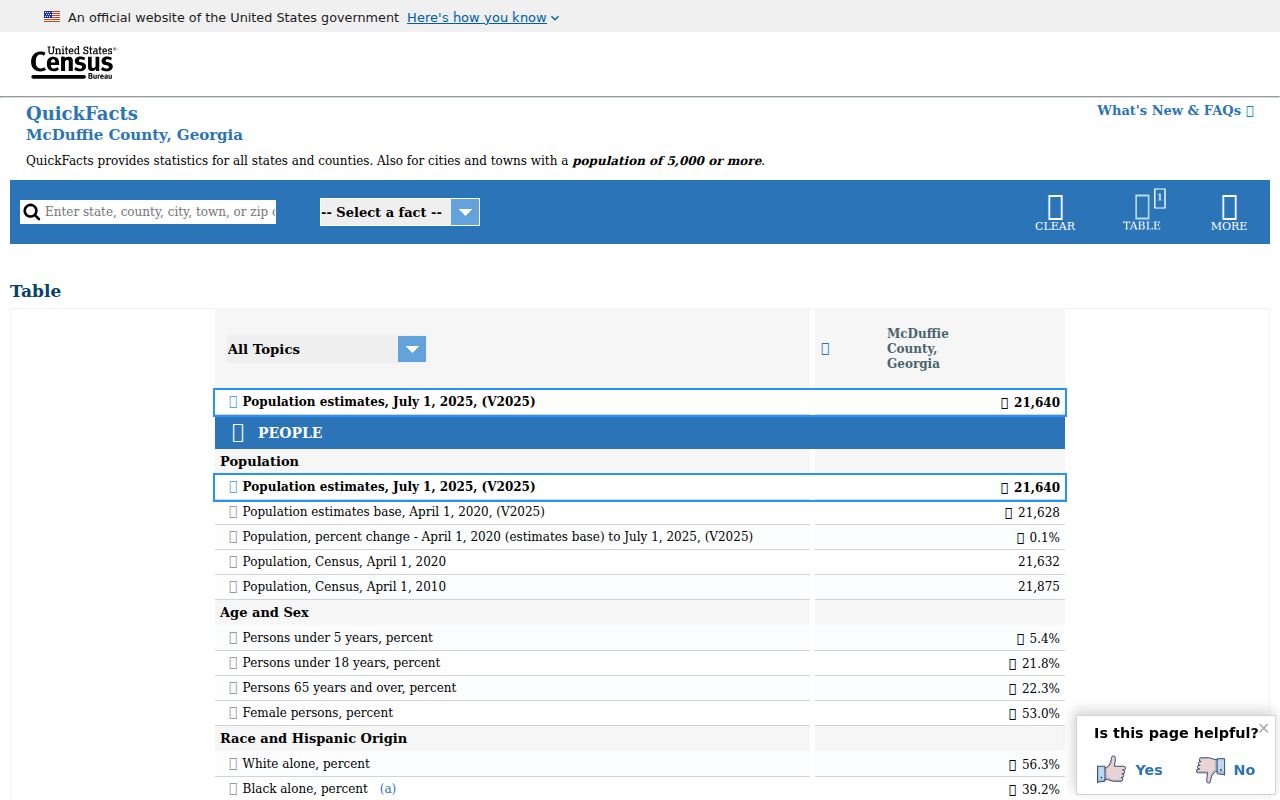
The population view explains service scale, while Town Hall and the responsible justice agency remain the record sources.
Dearing Records Across Agencies
Joint investigations show why the creator matters. A local call may produce communications data, a Sheriff's report, a GBI investigative file, a jail entry, and a prosecutor's court filing. No single office automatically holds the whole chain. A request should name the specific item and send it to the body that made it.
An official multi-agency prosecution notice illustrates distinct warrant, investigation, arrest, and prosecution roles.
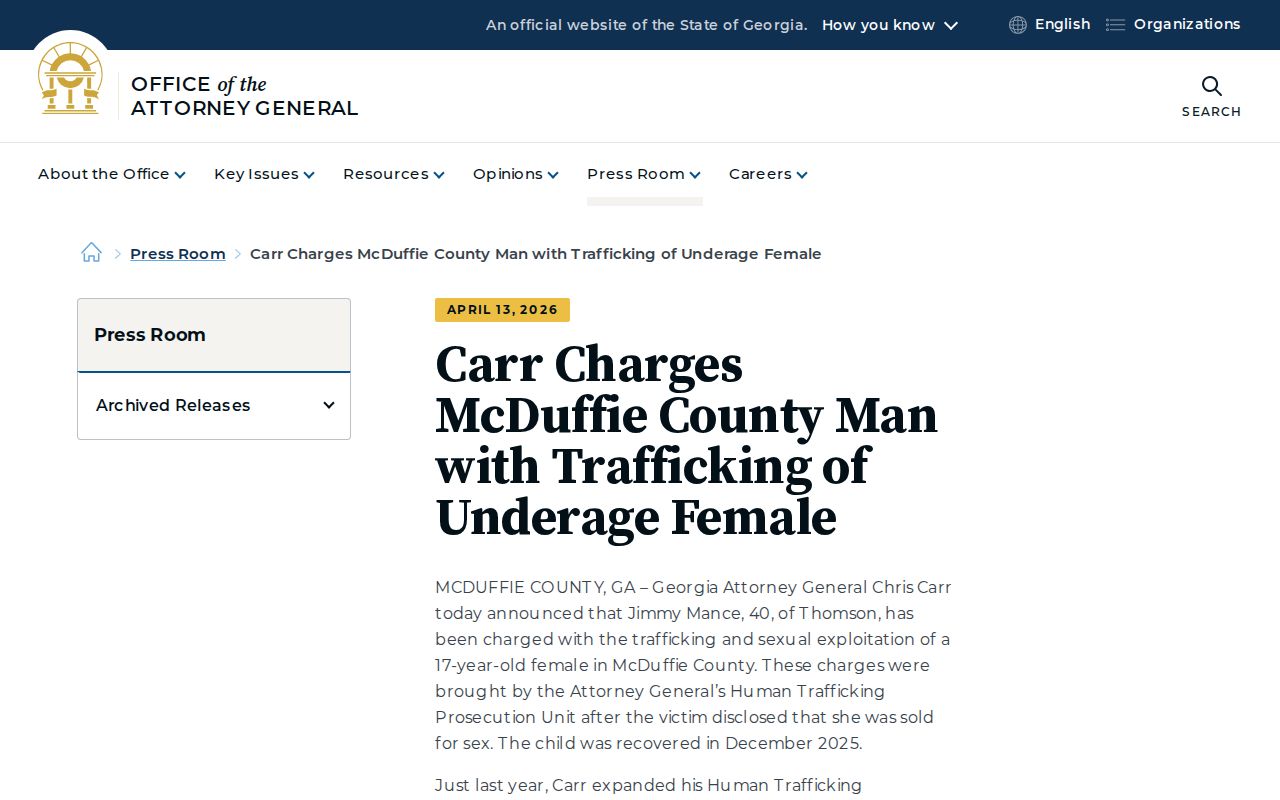
The example supports checking several custodians without treating allegations in a release as proof of guilt.
A separate GBI investigation notice shows how an outside agency may investigate before sending work to the circuit prosecutor.
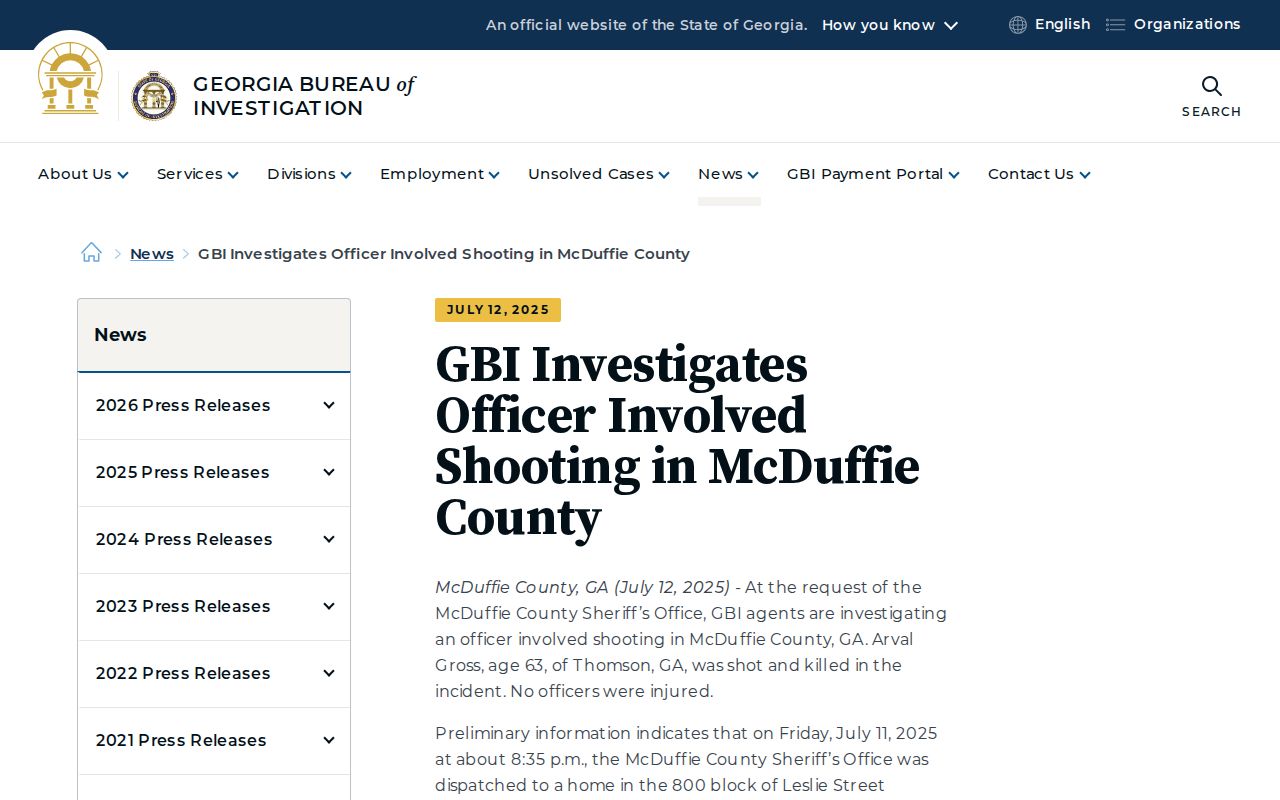
That handoff can leave different records with GBI, Sheriff, the prosecutor, and the eventual court.
Dearing Record Access Rules
The Georgia Open Records Act presumes agency records open unless another rule exempts them. Requests should seek existing records, not ask an office to answer questions or create a new report. An agency generally responds within three business days by producing the record, giving a later production schedule, or citing the legal reason for withholding. Closed files may be more accessible than active investigations, but protected details can still be removed.
Key Statutes:
Georgia Open Records Act, O.C.G.A. §50-18-70 et seq. establishes the presumption of public access.
O.C.G.A. §50-18-71 covers inspection, copying, electronic records, lawful charges, and response duties.
O.C.G.A. §50-18-72 lists exemptions for specified investigative, juvenile, victim, privacy, and security material.
Ask for electronic production when useful and request an itemized cost estimate. If Town Hall is not the custodian, confirm the correct office before resubmitting. Court records are obtained from the responsible clerk under judicial access rules.
Dearing Self-Review Beyond Georgia
A federal Identity History Summary is a fingerprint-based self-review, not a Dearing police search or county court lookup. It can help a person review their own FBI-held history when a broader federal product is needed. The request requires fingerprints and the FBI fee stated in the federal process.
The FBI electronic request portal is the official online starting point.
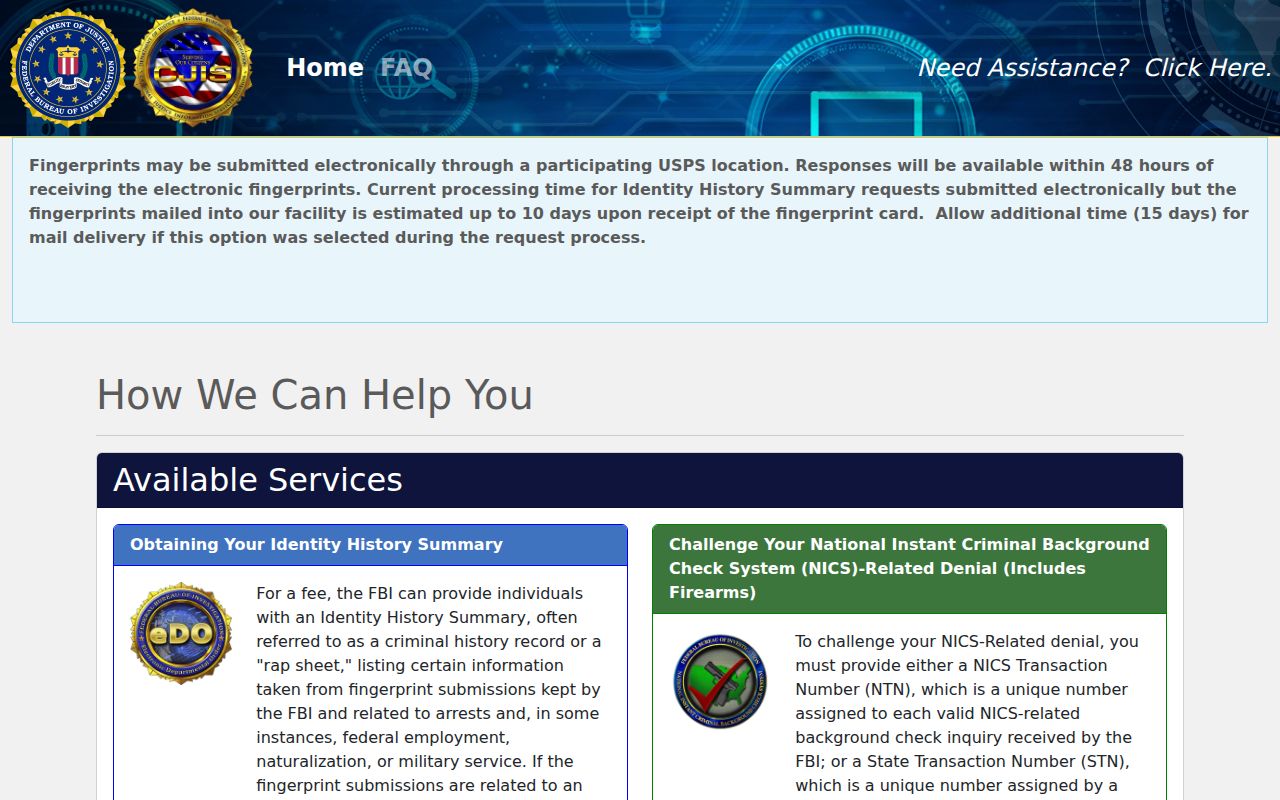
Use that service for its narrow self-review purpose, while Dearing-area reports, bookings, and court outcomes stay with local custodians.