
Checking Criminal History in Thomson
Begin with the event, not a broad name query. Thomson Police is the first stop for a report made by a city officer. Municipal Court is the source for its own traffic, ordinance, and qualifying misdemeanor cases. A person held after a Thomson arrest is routed to the McDuffie County Law Enforcement Center, while a felony prosecution belongs in Superior Court. Georgia Crime Information Center data is a later state layer and may not yet show a court result.
- Identify Thomson Police, the Sheriff, or another agency as the record creator.
- Ask Thomson Police for the incident or arrest report using one accepted identifier.
- Check Thomson Municipal Court when the charge stayed within its limited jurisdiction.
- Call the county jail and clerk for custody, felony, or later court information.
- Compare the final disposition with the GCIC history when reviewing a broader record.
Use exact names and dates. A case number is best when known. If the court result and state history disagree, ask the court that entered the disposition to transmit or correct it.
Finding Thomson Police Reports
Thomson Police records staff can retrieve a report with any one of five keys: the victim's name and date of birth, the complainant's name and date of birth, the incident date, the case number, or the suspect's name and date of birth. That flexibility matters when a person lacks a report number. It also makes a focused request more useful than asking staff to search every record tied to a common name.
The official Thomson Police page shows the local report route.
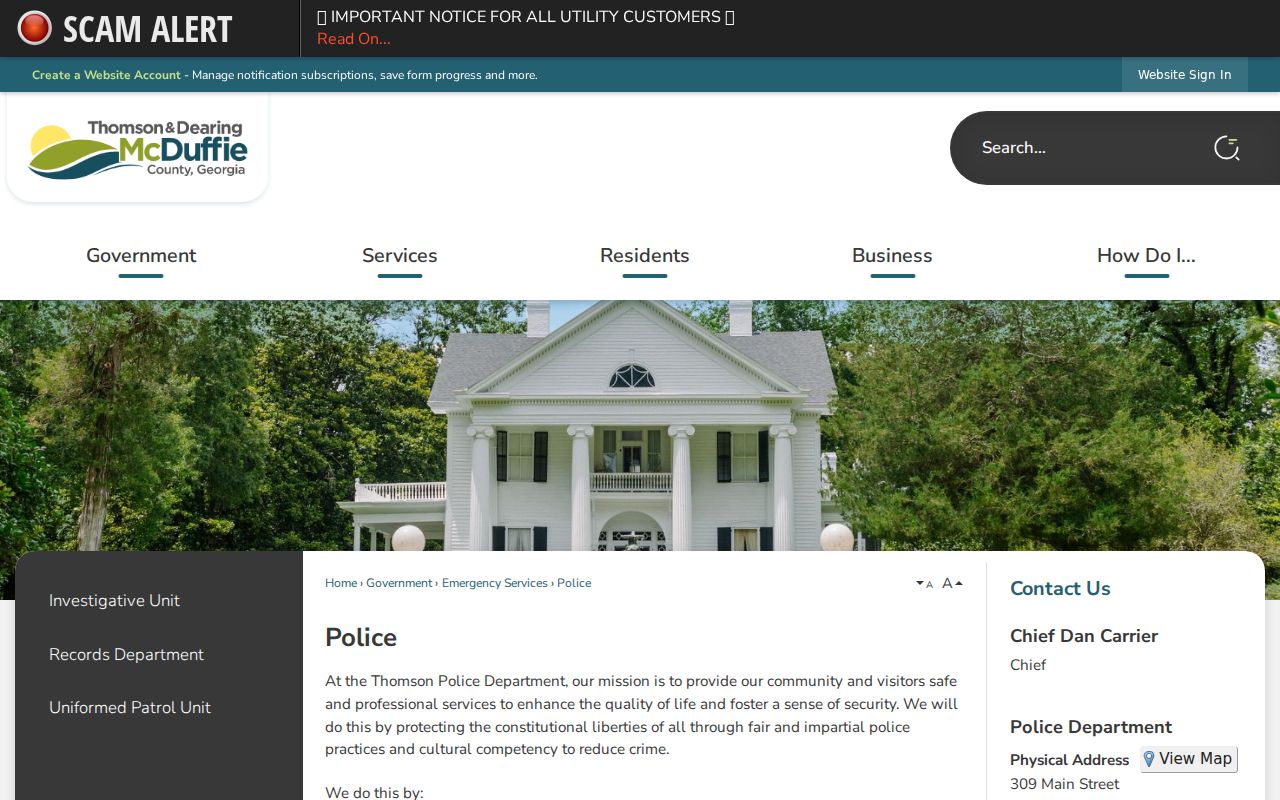
The captured page supports using the department that created the city report instead of sending the request to a county court clerk.
Records at Thomson Police Department
Thomson Police Department is at 309 Main Street, Thomson, Georgia 30824. The main number is 706-595-2166. Reports may be picked up from 8:30 a.m. to 5 p.m., after allowing five business days for processing. No city police fee schedule was published in the research, so confirm cost and acceptable payment before traveling.
A police report records allegations, statements, officer actions, and other investigative facts. It is not a finding of guilt. Active-investigation details, juvenile material, victim information, personal identifiers, and security-sensitive facts may be withheld or redacted. Ask for the specific existing report and a reason for each withheld part rather than asking the department to create a new summary.
Thomson Report Pickup Timing
The five-business-day instruction is a local timing rule, not a promise that every record is ready on the fifth day. Call first if the matter is complex, recent, or still active. Give the date, location, and one of the department's accepted identifiers. This reduces the chance of arriving before staff can locate the file.
For city administrative records that are not held by police, court, or communications staff, the unified CivicPlus request form offers Thomson in its entity menu. Login is optional and only saves or fills request details. The form asks for first name, email, chosen entity, and a detailed request, with an optional email-copy box. Police records should still go to their proper custodian.
Booking and Arrest Records in Thomson
Thomson has no identified city jail or city booking roster. Police direct current arrest and jail questions to the McDuffie County Law Enforcement Center at 751 Public Safety Drive, Thomson, 706-595-2040. No county-official online roster was found. Calling is the authoritative way to verify present custody, while older booking or arrest documents go through the Sheriff's Records Division at 706-597-3862.
A single incident can create separate files: a Thomson Police report, a county jail intake record, and a municipal or Superior Court case. Booking charges reflect intake and can change after prosecutor review. For a fuller channel-by-channel explanation, the county Arrest Search distinguishes current custody from reports and final dispositions.
Thomson Court's Split Locations
The municipal clerk works at 309 Main Street, but court sessions occur at the Administrative Building, 210 Railroad Street. Sessions are scheduled for the second Tuesday of each month at 1 p.m. The clerk's office is open weekdays from 8 a.m. to 5 p.m. and may close at lunch, so call 706-597-7385 before a visit.
The official Municipal Court page documents this city process.
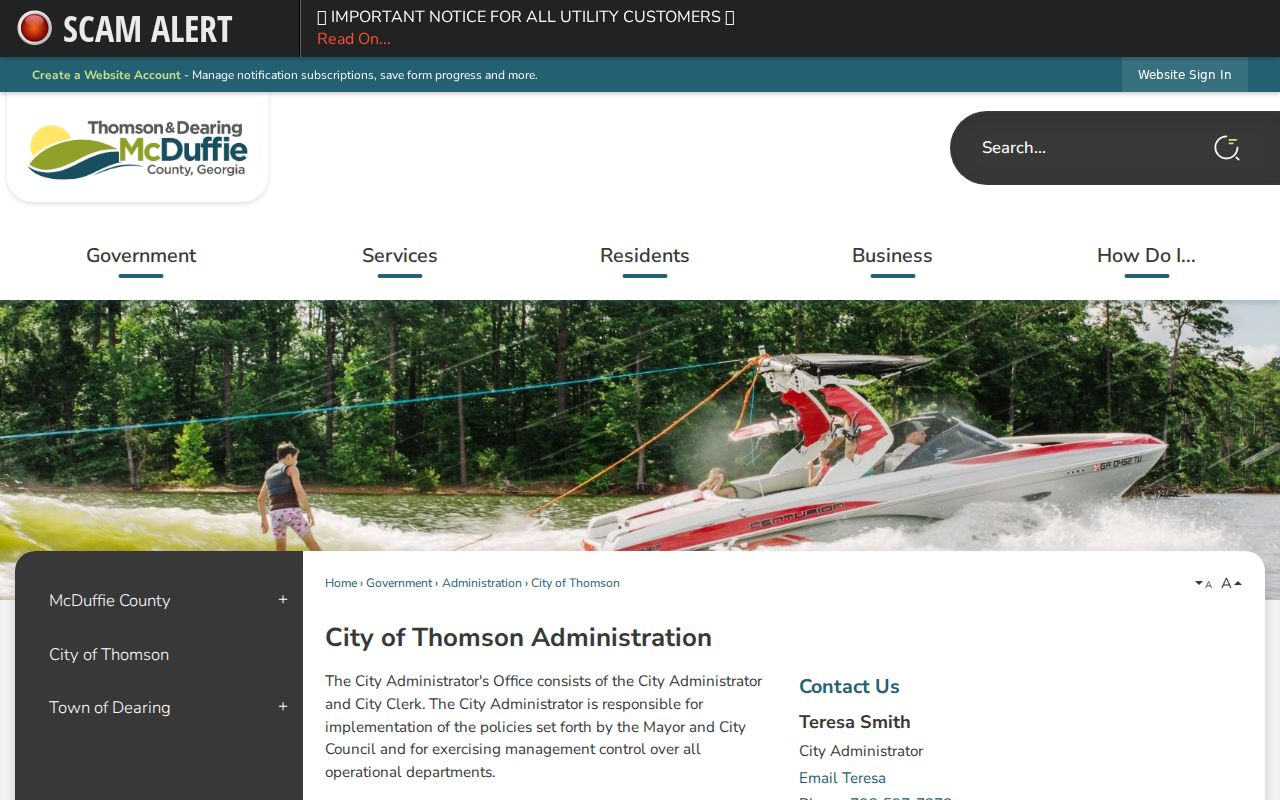
The image reinforces the key local distinction between the clerk counter and the place and time where the judge hears cases.
The Thomson Municipal Court File
Thomson Municipal Court hears misdemeanor traffic matters, city ordinance violations, and certain state misdemeanors initiated by Thomson Police or Georgia State Patrol within city limits. No public city case-search portal was identified. Use the clerk by phone or at the counter, and supply the defendant name, citation or case number, and an approximate date.
| Court Name | Thomson Municipal Court |
|---|---|
| Case Types Heard | City ordinances, misdemeanor traffic, and certain state misdemeanors arising within city limits |
| Case Lookup Channel | Clerk phone or counter at 309 Main Street; no public lookup found |
| What the Docket Shows | Case or citation identity, hearings, plea or judgment, sentence, and payment status when recorded |
| Copies & Fees | Ask the clerk about available copies, certification, current cost, and payment method |
The judge is present only during sessions and cannot discuss a case in advance. Clerks can explain procedure and record access, but cannot discuss the stop, give legal advice, or recommend counsel.
Thomson City or Superior Records
Jurisdiction determines the file location. A city traffic or ordinance matter may remain in Municipal Court. A felony moves through Magistrate Court's first-stage work and then to McDuffie Superior Court if prosecuted. The Superior and Magistrate clerk operates from Room 1401 at 210 Railroad Street; the main line is 706-595-2134 and the criminal desk is 706-595-2138.
Ask which court accepted the charge rather than assuming that the arresting officer decides where the final record lives. Municipal records and Superior files are independent. For an adult, unsealed felony file, request the docket, charging instrument, disposition, and sentence from the county clerk. Juvenile and sealed matters do not follow ordinary public access.
How Thomson Records Reach the County
Thomson Police makes its own incident or arrest report. If detention follows, the county jail creates the booking record. The proper court then creates warrants, hearings, charging papers, orders, and the disposition. Courts and other justice agencies report eligible arrest and outcome data to GCIC, but transmission can lag behind the courthouse file.
Record flow: Thomson Police Department › McDuffie County Courts › Georgia Bureau of Investigation, Georgia Crime Information Center
Use the police department for the event narrative, the jail for current custody, and the court for the legal outcome. A blank state disposition is not a conviction. When a courthouse record has an outcome missing from GCIC, obtain the court disposition and ask the court about transmitting the correction.
Thomson Records Across Three Counters
Thomson's justice records are divided across three nearby addresses. Police reports and the municipal clerk sit at 309 Main Street. Court sessions and the Superior, Magistrate, and Juvenile clerk functions are at 210 Railroad Street. Jail custody and Sheriff's records are at 751 Public Safety Drive. “Go to the courthouse” is therefore incomplete advice.
The city's growth helps explain this split. Thomson began as “Slashes,” a railroad crossroads, became the county seat in 1870, and is known as the Camellia City. Later growth around I-20 and Highway 78 brought city, sheriff, state patrol, and joint investigations into the same transport corridor. The agency that created a record remains the sound starting point.
Using Thomson Crime Data Carefully
No accessible official Thomson Police annual report supplied city-specific crime totals during research. Do not infer a city count from a county figure or from unofficial arrest pages. The FBI Crime Data Explorer can be queried by agency and year, but each published number should identify both the agency and query period.
The FBI Crime Data Explorer is the official interactive source.
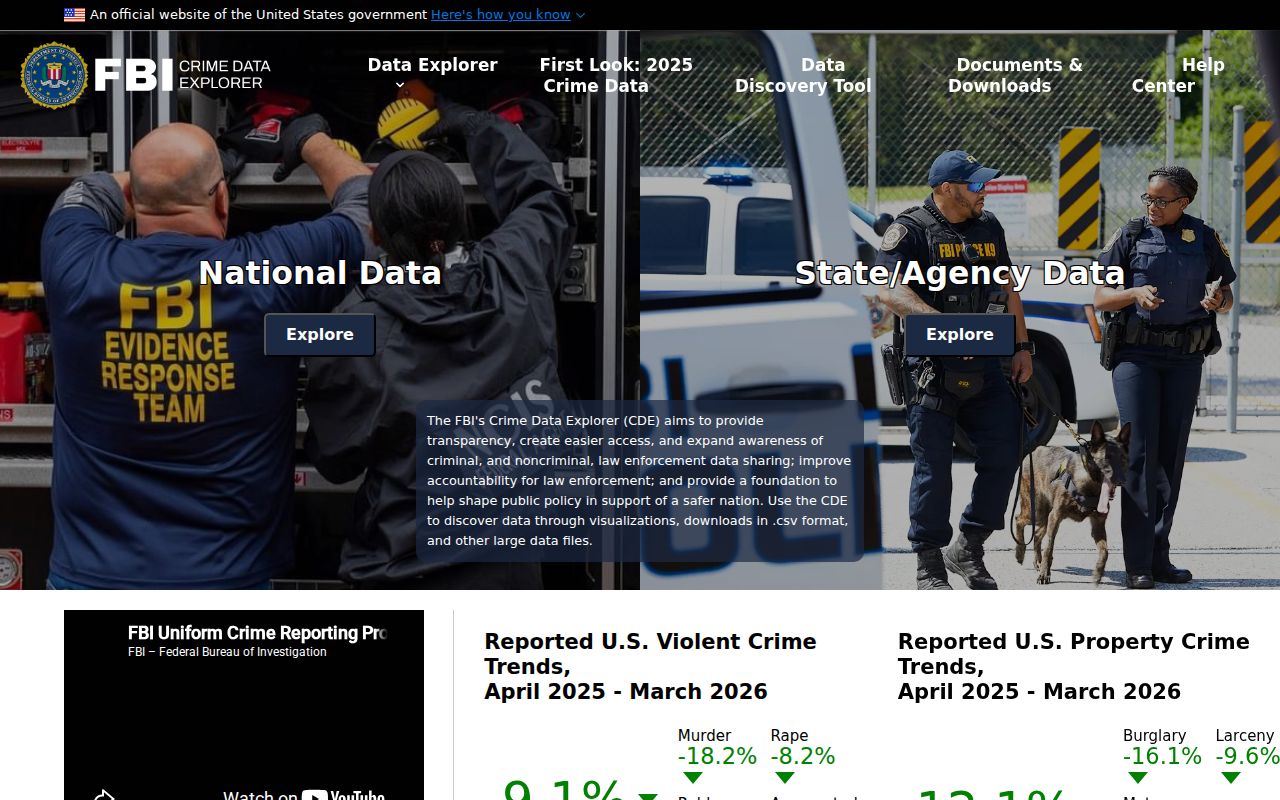
The interface is useful for trend context, but its totals do not replace a police report, booking record, or named court file.
The Census Thomson profile provides population context.
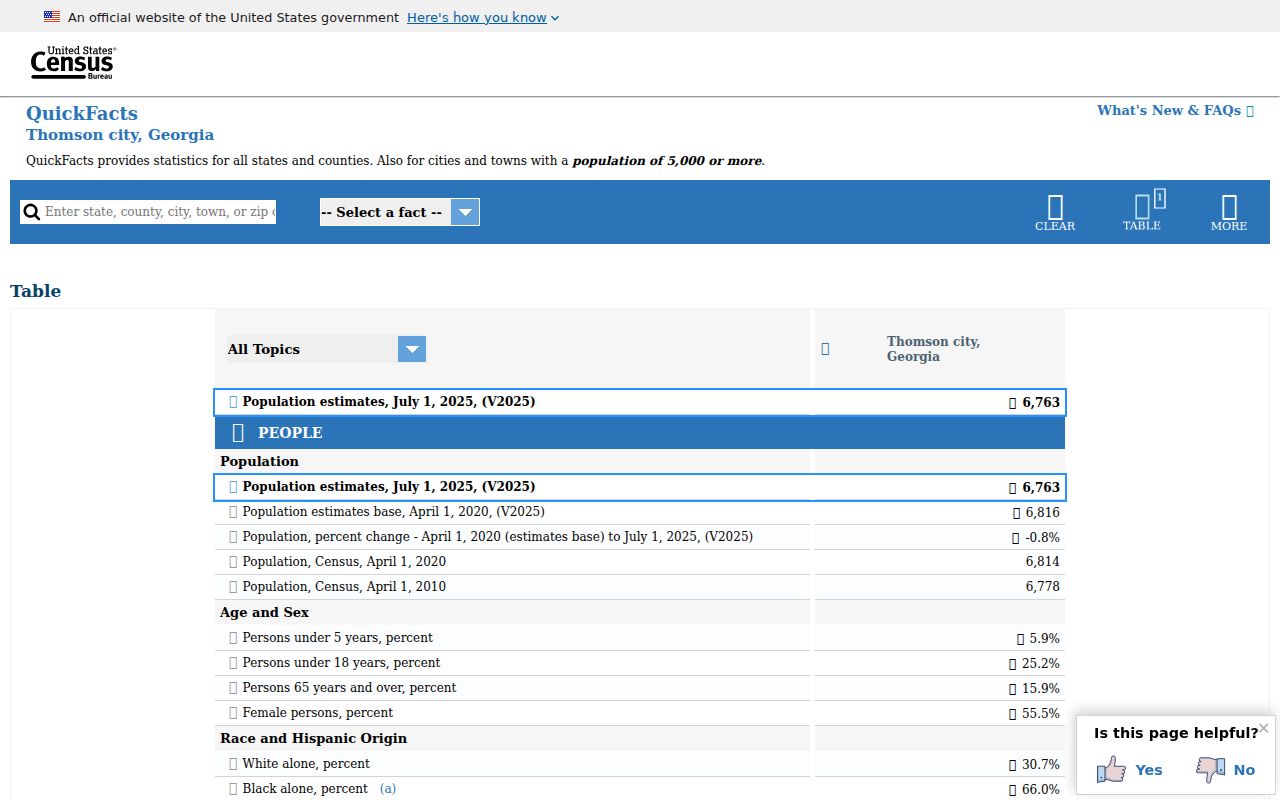
Population measures help frame the city, but they cannot establish how many local criminal records exist.
Thomson Record Access Rules
Georgia's open-records law presumes public agency records open unless a specific rule protects them. A good Thomson request identifies an existing record, date range, incident or case number, and desired electronic or paper format. The agency generally must respond within three business days by producing records, stating when production will occur, or citing the legal basis for withholding. Court files are judicial records obtained from the proper clerk.
Key Statutes:
Georgia Open Records Act, O.C.G.A. §50-18-70 et seq. presumes public records open unless an exemption applies.
O.C.G.A. §50-18-71 governs inspection, copies, electronic production, charges, and agency responses.
O.C.G.A. §50-18-72 protects specified investigative, juvenile, victim, privacy, and security material.
Request an itemized estimate before costly search or redaction work. If access is denied, ask the custodian to identify the exact exemption. Restricted GCIC information and a sealed court file are not the same thing.
Thomson Post-Sentence Records
Some criminal matters also generate parole or community-supervision records after sentencing. Those systems do not replace the local judgment. They answer later questions about parole consideration or supervision and belong to separate state agencies.
The Georgia Parole Board's Thomson session notice illustrates how victim input can join a post-sentence file.
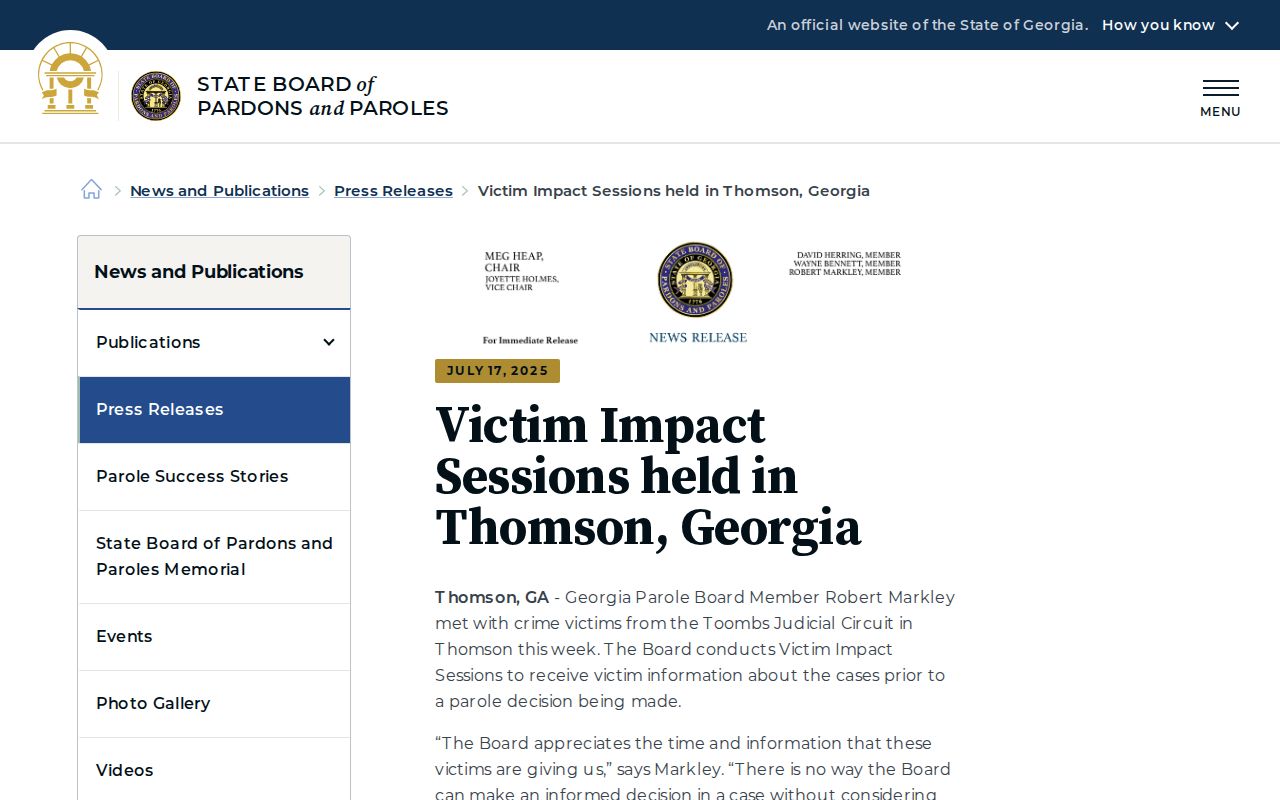
The state process is a later layer, not a substitute for Thomson Police, Municipal Court, or the McDuffie Superior Court judgment.